Additional project Personal · August–October 2026
Idle Hands — a multiplayer office idle game
Points accrue while you're away. You buy the things that earn faster, react when the office throws an event at you, and compete on a weekly leaderboard — with office politics as a mechanic.
Play the original game
A browser-only adaptation of the game for this portfolio: the game's own map, renderer, HUD, panels, events, office cast, names, jokes and artwork, with simulated multiplayer: the other players on the floor are simulated in the page. Progress saves only in this browser. It is not the hosted multiplayer service and never connects to it.
- Badge in with any name, build your character, then tick and sign the two office forms — the original intake. In a hurry? Skip intake — play as Guest in the bottom bar gives you a ready-made Guest desk.
- Walk with the arrow keys or by tapping the floor; open anything you walk up to — the shelf, the couch and the break-room notice have something to say.
- Work at your desk, hire staff, and watch what co-workers do to you. The Mirror changes your look; the Supply Closet previews each costume on your own character. The bottom bar can bring on an event, a printer jam, a meeting or the good chair; Reset starts over.
What is different from the hosted multiplayer game: the other players are simulated (they walk, earn, hire, act on their own and now and then start a coffee break); the office cast, names, places, jokes and artwork are the game's own, except the office TV, which shows four original illustrated scenes from a fictional talk show, Talk-Back Hour, in place of the game's photographs and show name; the server's rules — prices, deeds, buffs, restructuring — are re-implemented in the page, because the originals live in the game's database; nothing is saved beyond this browser (a saved desk carries over when the game is updated) and Reset starts over. The weekly countdown follows the demo clock, but the simulated standings never close a week or reset. The Office Fund's milestone amounts are scaled to this demo's smaller invented economy so that tiers can be reached. The demo clock can be advanced to show scheduled events.
New in recent versions (builds 158–194, October–November 2026)
- Make the office yours (builds 186–194, November 2026). Customize owned items — desks, chairs, rugs, frames, the TV, carried accessories, outfits and pins — with presets, a color picker and patterns such as stripes, checks and confetti. The full preview is free; each paid change costs eight hours of your current output and is quoted before you confirm, and a rug keeps its tier's motif under a new finish. The vending machine shows a server-timed countdown between pulls and says plainly that nothing is guaranteed; the Office Fund shows this week's pooled total against a twenty-step milestone ladder; The Fridge and the Bulletin Board join the walking directory; and weekly raises are described as lasting until Friday's reset.
- Office stories and a meeting on the map (builds 168–185). Free prop performances — water the plastic plant, sit on the couch — with rotating punchlines in small speech bubbles. A weekly office poll, commendations you can give a co-worker (with a certificate), plant-watering leaders and a shared lounge story, all cosmetic and reset on the Friday 4 PM Pacific cycle. A custom photo head beside the nine illustrated ones (in this demo the photo stays in your browser; nothing is uploaded). An office TV, The Productivity Flatscreen, in the Catalogue. The Birthday Card shows what signing costs — four minutes of current earnings, at least 50 BW — and any shortfall. Active effects sit together in the top bar, the good chair turns up in more places around the floor, the Meeting Room joins the Office directory, and the game has its own tab icon. In this demo the simulated co-workers vote, nominate and sign too.
- Room for nonsense (build 167). All six Office Nonsense sections — office log, rumors, bingo, daily, lounge and awards (Employee of the Minute) — fit in a three-by-two grid on any screen, with a clear selected state; notifications stay underneath open dialogs.
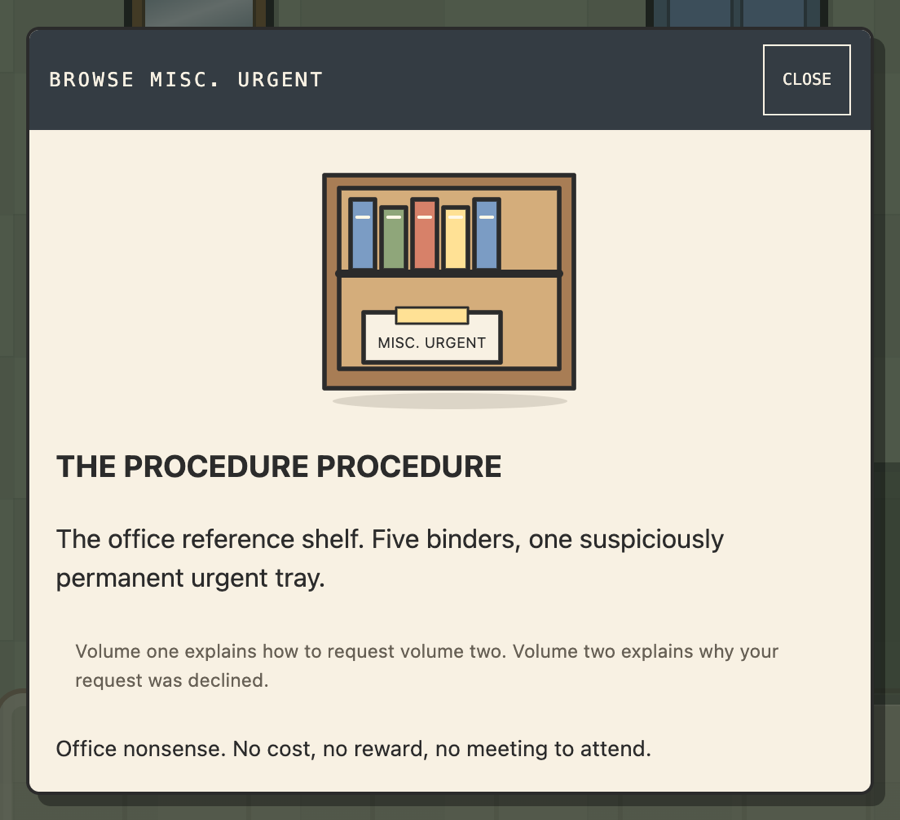
- A place for everything (builds 165–166). The shelf, the couch and the break-room notice open free illustrated readings with a joke; the couch and the notice lead to the break table. The calendar, plant rotas and printer apology are readable too, and the office props are right-sized.
- Familiar faces (build 165). The original first-name cast, their roles, the lounge and the game's branding are back.
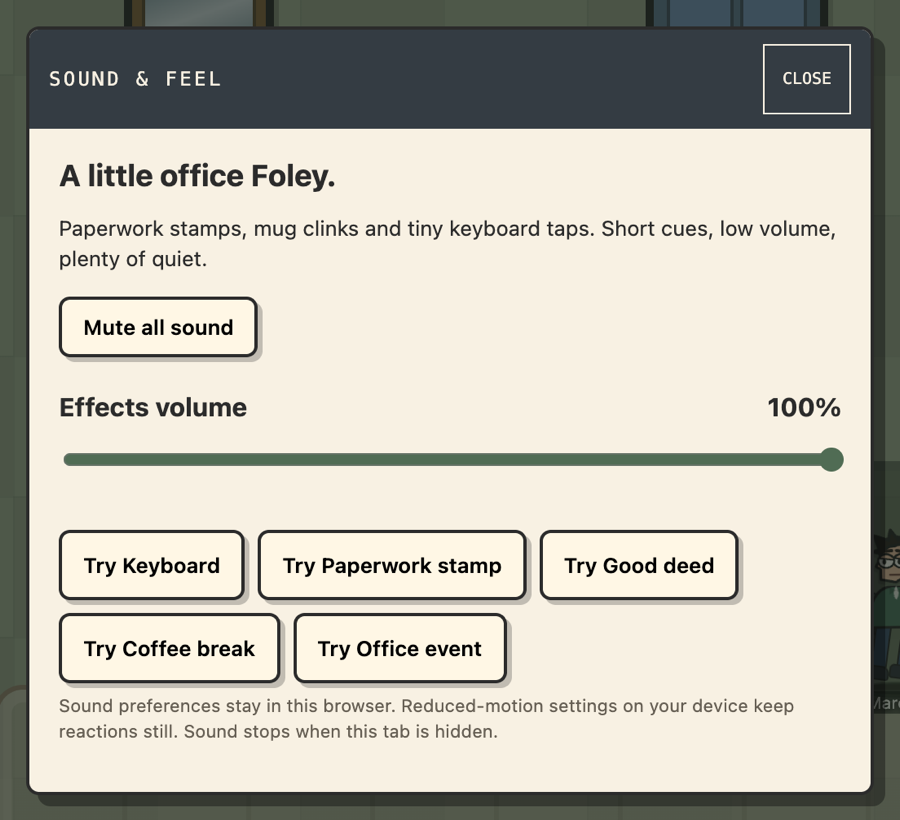
- Sound & feel (builds 163–166). Small office sound cues — paperwork stamps, mug clinks, keyboard taps — with a volume control and mute, on by default. Sound at the top right opens the controls without changing your settings; your choices are kept in this browser.
- A lived-in office (builds 162–163). A walking directory, labelled emotes, reactions to what you just did, coffee breaks with live invitations, recurring office comedy and compact phone controls. Permanent desk and vanity purchases are kept across weekly seasons.
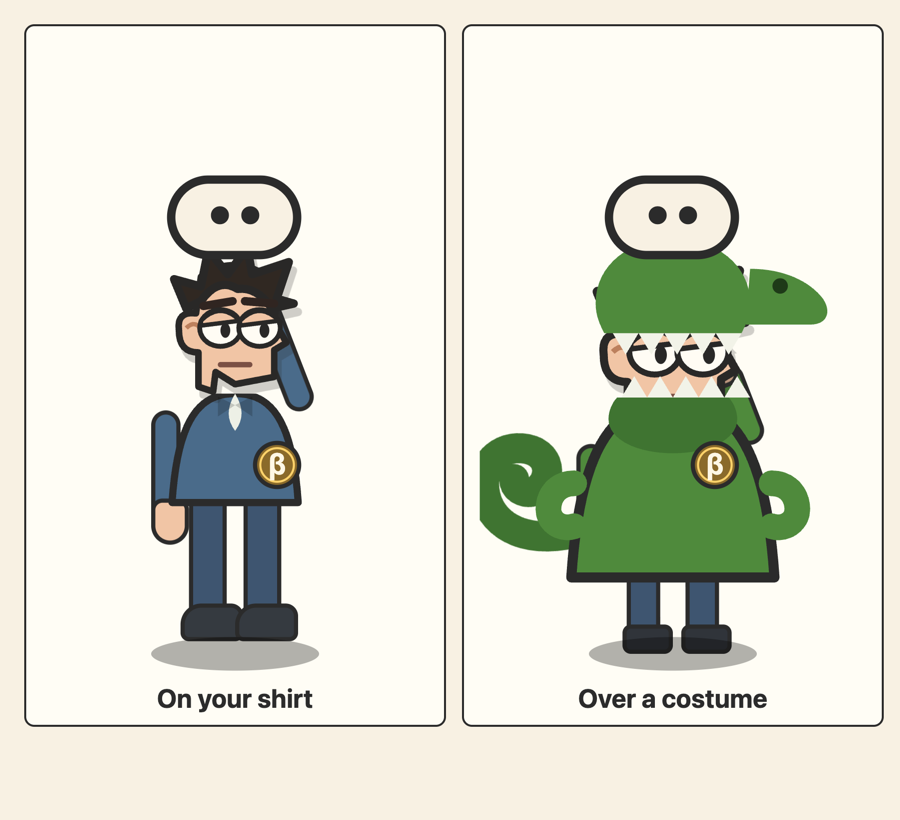
- Wear your pin (build 161). Pick one collected pin in the HR Cabinet's Collection and wear it; it shows on your character's chest in the office, over everyday outfits and costumes alike, and stays on after a reload. The server checks that you own the pin. Desks created before 21 November 2026 get a Beta Tester pin.
- A clear weekly deadline (builds 159–160). The scoring week closes every Friday at 4:00 PM Pacific, with a live countdown on the office whiteboard and in Standings, which also shows the deadline in your own time zone.
- Character builder. New hires build their employee on the first day — nine illustrated heads, body style, build, hair, eyes, expression, skin and glasses — and can change it any time at the Mirror.
- A permanent wardrobe. Outfits bought with Busywork stay yours; the server checks the price, ownership and what you may wear. The Supply Closet shows each costume on your own character first.
- Desk catalog artwork. All 34 catalog items — for yourself and your office — have their own illustration and a free, expanded preview before you spend anything.
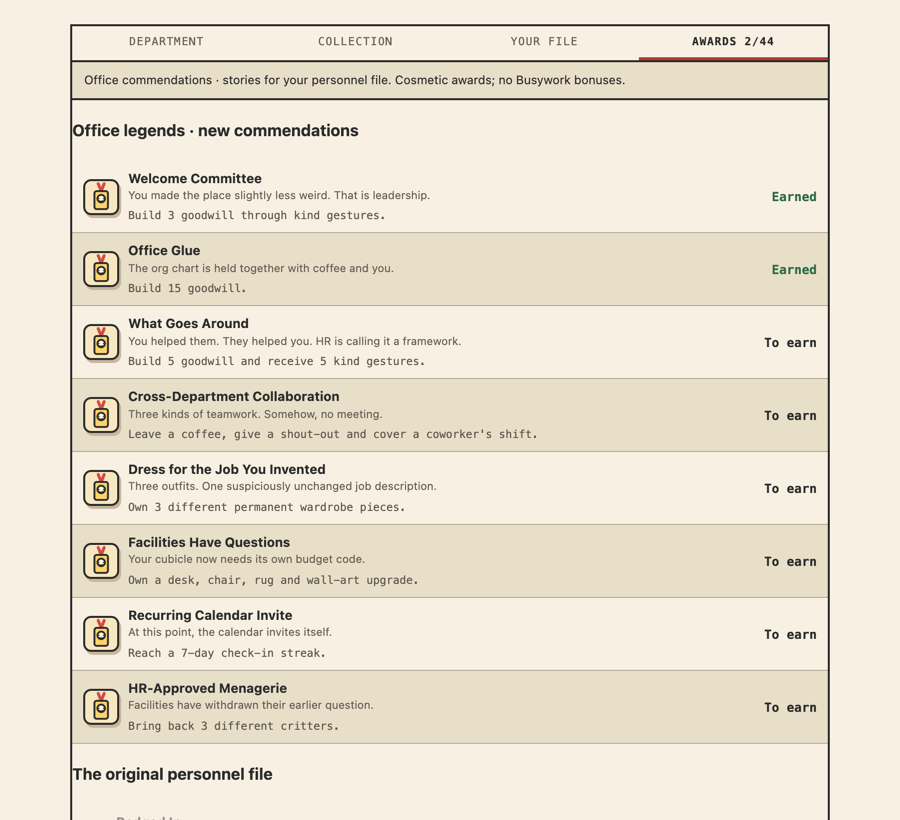
- Office commendations. Eight cosmetic awards for your personnel file, such as “Office Glue” and “Facilities Have Questions”, granted by the server from what you actually did — the page can't award them to itself. New office memos too.
- A friendlier office. Cut-out characters and fixtures in one style, a break table with a box of donuts and two mugs, and onboarding and help that scroll properly on phones.
How the real game works
- A server-checked economy. Earning, buying and every social action go through about fifty database functions that check the rules and the balance, so editing the page can't grant points.
- Play first, sign up later. One click creates an anonymous player; an e-mail can be attached later to keep progress on another device.
- Weekly seasons with a recap, so newcomers can compete; live office events every connected player sees at once.
- One static page talking to its database directly — no build step.
- Automated checks on every change in the game's repository: economy rules, browser tests of the page at desktop and phone width, and the database rules run in a temporary test database. They do not exercise the hosted backend or real accounts, and they do not test this portfolio adaptation.
My part
Concept, game design and rules, and directing the build with AI assistance. Early versions were uploaded through the web, so who wrote which parts is not recorded there; since October 2026 each change goes through a reviewed pull request with the automated checks above.